Tuesday, March 31, 2015

Mullayanagiri peak, Chikamagalur


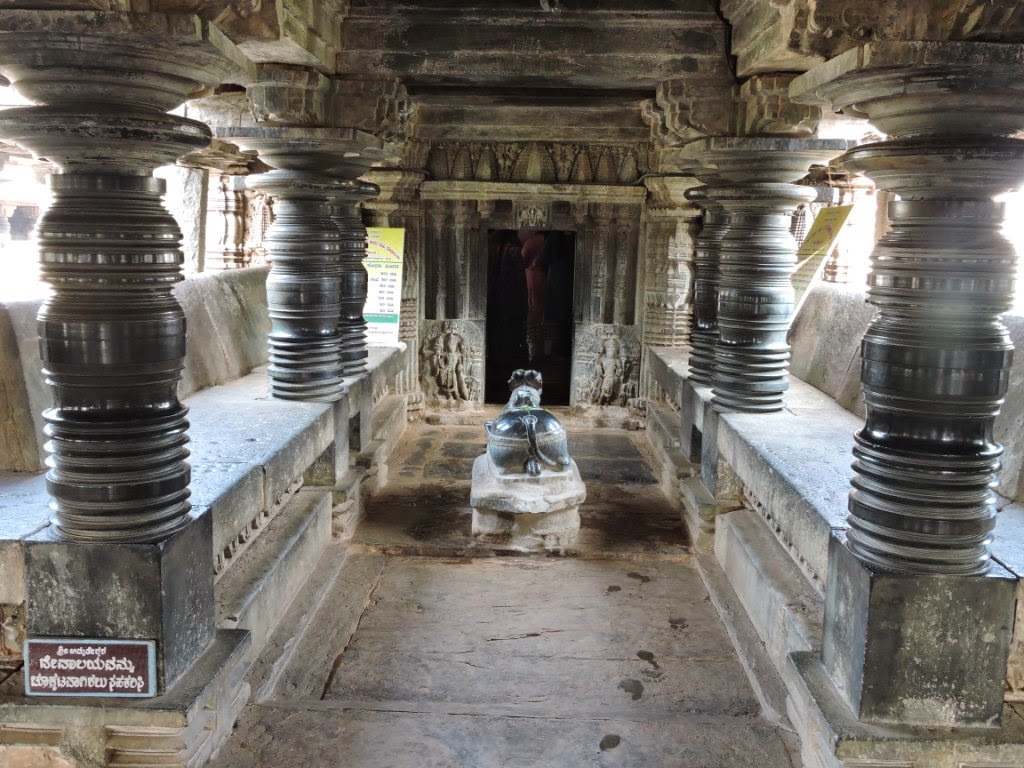
Amrutheshwara Temple, Amruthapura, Tarikere, Chikmagalur


Tourists visiting Kemmangundi should not forget to visit Amrutheshwara temple. The temple is on the route to Kemmangundi. A left deviation on B.H Road leads to Amrutheshwara temple.


The temple is located in the town of Amruthapura, 67 km from Chikmagalur  in Tariekre taluk of Chikkamagaluru district in Karnataka stateIndia. It is 35 km from Shimoga on NH 206.
The temple was built by Amrutheshwara Dandanayaka under Hoysala King Veera Ballala II. It is very close to Bhadra wild life sanctuary.


Amrutheshwara Temple was built in the year 1160 by the Hoysala kings. This temple is built with stone sculpture.


Tuesday, February 3, 2015

A Wild Holiday in Shivamogga

A Wild Holiday

in
Shivamogga


                                                   A Book by
  
Manoj Saldana


 Available at www.amazon.com


© Jeevana Charitable Trust, 2015.
All rights reserved.
No part of this book may be reproduced, stored in a retrieval system, or transmitted by any means without the written permission of the publishers.

First published by Jeevana Charitable Trust ® 2015
2nd Main, Sharavathi Nagar, Shivamogga – 577 2011.
Ph: 919482095412
Email:jeevana.trust@gmail.com


DEDICATED TO

Nature lovers


Contents

Kavaledurga. 67
     Places around Kodachadri…………………………..…………………78
    Places around Shettyhalli Wildlife sanctuary………………..…88


PREFACE


Shivamogga district is in Malenadu region of Karnataka state in India. Malenadu region is in the midst of Western Ghats, which is declared as World Heritage site.

`Malenadu’ in Kannada means land of rain. Shivamogga comes alive in rainy season when the rivers are full to the brim, waterfalls dance to their glory, lush greenery cover the landscape, forests and wildlife regain their beauty.

It is said that Malenadu was specially made by God as a Garden. The rainy season here is from June to October. So, the right time to visit Shivamogga is during the monsoons. But, summer is the best time to visit the hill stations and mountains here.

Shivamogga has a lot in store for tourists. World famous waterfalls like Jog Falls, wild life sanctuary, bird sanctuary, wild life safari, forests and nature camps like Agumbe, hill station and mountain peaks like Kodachadri, historical places like forts, spiritual places like temples and rivers such as Sharavathi, Tunga and Bhadra flow here.

Explore a holiday any weekend in Malenadu’s wild circuit. A weekend in Shivamogga is a typical holiday on the wild side.

This part of the earth is a trekker’s paradise. The forests and mountain ranges challenge the adventurous to conquer them.

Nature has been partial to this part of the world. Blessed with dense Western Ghats, the bountiful rivers, fertile lands, green woods and immense wild life, Shivamogga forest range is an ideal place for adventure lovers.

Shivamogga, wholly and entirely is bright and beautiful. Everything waiting to be discovered by an adventurer.

A couple of days stay at Shivamogga is memorable, where nature creates waves in the unbridled mind.


Shivamogga is 275 km from Bengaluru, and 770 km from Mumbai. Bus and rail network to Bengaluru is excellent. The nearest airport is in Mangaluru, which is 200 km from Shivamogga. 

Bhadra Wildlife Sanctuary

Bhadra wildlife sanctuary is one more wildlife place in Shivamogga district apart from the Shettyhalli wildlife sanctuary.

Infact, Bhadra wildlife sanctuary is distributed among Shivamogga and Chickmagaluru districts. The majority portion is in Chickmagaluru district.

There are several tourist locations in Bhadra wildlife sanctuary like Mullayyanagiri peak, Kemmangundi hills, Bababudangiri hills, Hebbe water fall, Kalatgiri water fall and many more.

The Bhadra Wildlife Sanctuary boasts of rich wild life. It is a paradise for bird watchers and wildlife photographers. The commonly spotted birds here are Grey jungle fowl, Red spur fowl, Painted bush quail, Emerald dove, Southern green imperial pigeon, Great black woodpecker, Malabar parakeet and Hill Myna. More than 200 species of birds exist here.


Among the reptiles, the Marsh crocodiles are usually found in the upstream stretches of the Bhadra River, the Monitor lizards are also a common sight. The Common otter and the Smooth Indian otter can usually be sighted at the Bhadra Reservoir.

Gaur certainly are the pride of Bhadra which is a common sight. Leopards are also fairly common, particularly in the Lakkavalli area. Bhadra Wildlife Sanctuary has been recently adopted under ‘Project Tiger’.
This is an ideal tiger habitat although it is rare to see one! Wild dog tracks are also found all over the area. Elephants can be seen at all parts of the sanctuary and seem to migrate locally between Muthodi and Lakkavalli.

Other mammals found in the area are common Palm civet, Stripe necked mongoose, Sloth bear, Large brown flying squirrel, Sambar, Spotted deer and the Wild boar.

The climate is generally pleasant all through the year. During rains between June and September the entire sanctuary is lush and green. Summer months of March, April and May would be slightly warm.
With the soft ripples of the river's backwaters providing a subtle background score, rest and tranquility are what this experience is about.


River Tern Resort


Cottages at River tern resort


Water sports


                                             Backwaters 

The River Tern Lodge is a pleasurable experience from the word go! The Bhadra Tiger Reserve is about 4 km from the Lodge. A jeep safari in the evenings offer the opportunity to sight leopards, gaurs, elephants, crocodiles, deer, wild boars, monitor lizards, etc.

Bhadra Wildlife sanctuary has been declared as heritage point and government has taken strict rules to make it plastic free zone. There are many mountain peaks, waterfalls and historical places located in Bhadra wildlife sanctuary. It is also home for rare flora and fauna.

Bhadra wildlife can be reached by several ways. Start from Bhadravathi towards Koppa road to reach Umblebail from where Bhadra Wild life starts which is 22 km from Bhadravathi. 

From Shimoga the distance is around 30 km. On the way Kuvempu university campus and BRP dam can be seen. Take a right turn near the Forest office and drive for 3 km to reach the wildlife sanctuary. 

Prior permission should be obtained at the forest office to visit the sanctuary.


There are several ways to reach wildlife out of which the route from Chikmagaluru is the most opted one. There are several buses available till the nearby village from where one has to catch auto rickshaws to reach various other locations. Private vehicles are the preferred way to travel.


There are several coffee estates which are a treat to watch while driving in Bhadra wildlife sanctuary.

Wild life in Bhadra is unique and there are many rare species of medicinal plants.

Bhadra River Project (BRP), Bhadravathi

Bhadra River Project popularly known as BRP is a dam across the river Bhadra. BRP is a massive reservoir constructed to store water for irrigation, power generation and also for drinking water supply.


BRP falls in Chikmagaluru district but is near to Bhadravathi. The reservoir is located in Bhadra Wildlife sanctuary. This makes it an ideal place for a perfect wildlife weekend. Infact, the River Tern resort is located nearby the reservoir.
BRP is famous for the light show in the evening. Colourful lights are focused on the water gushing outside the dam. But, this is a rare event as the water if let out of the dam only when it is full. So, this happens only during rainy season from July to October.

The reservoir forms backwater here which is ideal for water sports like boating and kayaking. A guest house facing the back water is a nice place for a picnic. Kuvempu University is nearby the dam.

Permission to enter the dam is restricted and one can enter the dam only with prior permission from the authorities.

Bhadravathi is 24 km from BRP. To reach the location head towards Koppa road from Bhadravathi and take left turn at Hunsekatte cross towards Shankargatta. Drive for another 10 km to pass Kuvempu university to reach BRP dam.


From Shivamogga, drive towards N.R Pura road and take left at Junction to reach BRP.

There are several buses available from Shivamogga and Bhadravathi till University and from there one can walk a km to reach this place.